
Urban City Stories: World Game
SUBARAEducational
4.53.29K Reviews
- Version
- 1.7.0
- Installs
- 50.00M
- Age Rating
- Everyone
Screenshots
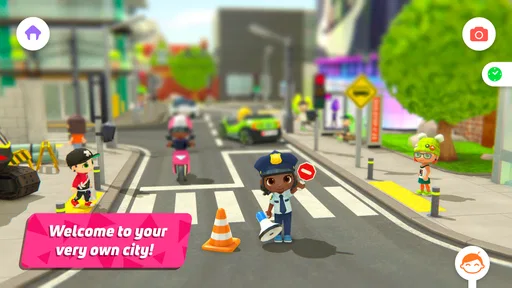
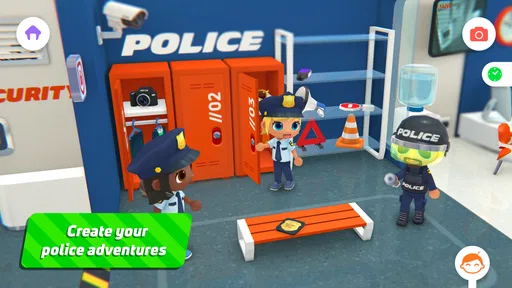
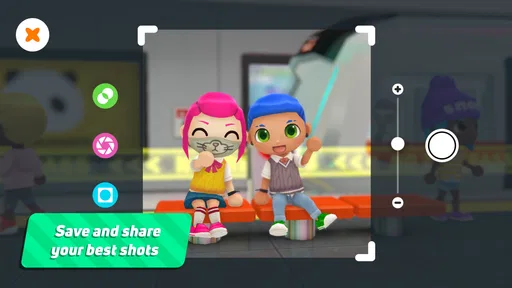
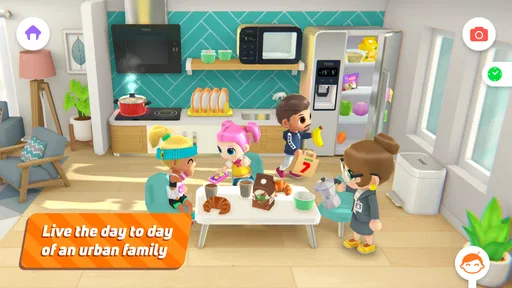
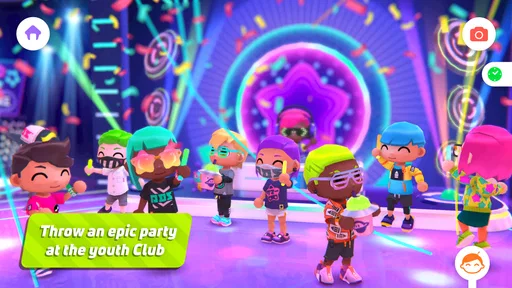
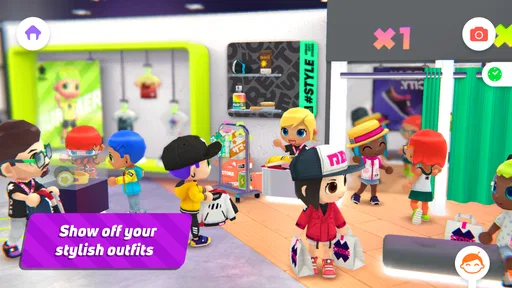
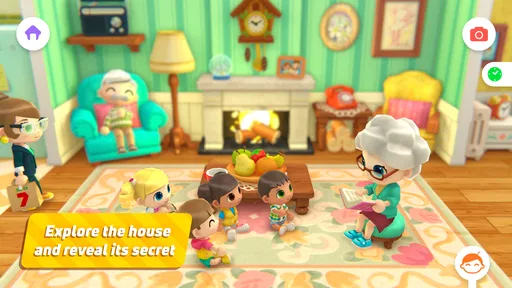
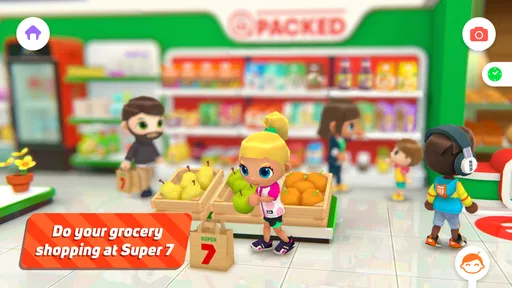
Our Review of Urban City Stories: World Game
 Analysis by Appyee
Urban City Stories: World Game is the kind of educational roleplay game that makes a strong first impression without asking me to learn complicated rules. I can move through a city, enter familiar places, and invent small stories around shops, homes, and streets. That simple freedom is the main attraction: instead of chasing a score, I decide what is happening and who is involved.
After spending time with it, I see why it has reached more than 50 million installs and an average rating of 4.5 from around 202 thousand ratings. It is approachable, colorful, and easy to hand to a child who enjoys pretend play. At the same time, its long-term value depends heavily on whether the player can keep creating new situations. The first week feels naturally fresh; later, the experience becomes more personal and requires imagination from the player.
What the first week feels like
The opening appeal is immediate because the setting is recognizable. A city gives children a collection of everyday locations to explore, and those locations become stages for make-believe. One visit can become a shopping trip, another can turn into a family outing, and a street can connect several separate scenes into one larger story.
I like that the game does not force a single correct way to play. A child who enjoys arranging characters and objects can focus on setup, while another can start acting out a story right away. That makes it more flexible than a traditional educational game built around questions, timers, or fixed lessons. The learning value comes through language, sequencing, social imitation, and decision-making during play rather than through formal exercises.
For a realistic everyday use, I could see a child playing it after school while an adult is nearby preparing dinner. The child might create a short routine involving a home, a shop, and a trip through the street. An older sibling could join by taking responsibility for another character. This kind of shared play is where the game feels most useful, because the digital setting gives children something concrete to talk about instead of leaving them with an entirely open blank page.
The first sessions are also a good time to watch how the child approaches the world. Some players will explore every location carefully, while others will repeat one favorite scene. Neither approach is wrong, but it tells me whether the game suits that child. Someone who enjoys inventing dialogue and changing routines will probably get more from it than someone who expects constant goals or a clear campaign.
Why roleplay works better here than a lesson format
In my experience, pretend play can hold attention longer than a worksheet when the child already likes stories. Urban City Stories: World Game gives that imagination a familiar framework. The city is not merely decoration; it helps turn abstract ideas such as going somewhere, meeting someone, buying something, or returning home into actions the player can stage.
That makes it especially suitable for younger players who are practicing everyday vocabulary or social scenarios. A parent can ask what a character is doing, why the character went to a particular place, or what should happen next. Those questions turn passive tapping into conversation. I would not treat the game as a replacement for structured learning, but I do think it can support communication when an adult plays alongside the child occasionally.
There is also value in letting children make harmless mistakes inside a pretend setting. They can change the order of events, restart a scene, or invent an unusual outcome without the pressure of failing a level. That freedom is a genuine strength, although it also means the game will not provide the same measurable progress as a spelling, mathematics, or language-learning app.
Who will enjoy the early sessions most
The best match is a child who likes dolls, miniature worlds, storytelling, and everyday routines. It can also work for siblings who enjoy taking turns directing scenes. The Everyone age rating makes it broadly accessible, and the game is free to start, which lowers the barrier for families who want to test the style before committing to it.
I would be more cautious with children who need constant rewards, missions, or visible advancement. The appeal is not built around defeating opponents or completing a long sequence of challenges. If a player asks, “What do I have to do next?” every few minutes, the open-ended structure may feel empty rather than relaxing.
It is also not my first choice for a child who needs a focused academic tool. The educational category describes the style of play, but this is still a city roleplay experience. For direct practice in reading, arithmetic, spelling, or another school subject, a dedicated learning app is likely to be more effective.
What remains after the novelty fades
The important question is whether the city can support repeated play. My answer is qualified: it can, but not automatically. The game offers a setting for stories rather than an endless supply of authored stories. Once the player has explored the familiar places and learned the basic rhythm, continued enjoyment comes from changing the characters, motives, and sequence of events.
That is a meaningful distinction from level-based games. In a conventional puzzle or adventure title, new content usually arrives as new challenges. Here, the player creates much of the variation. A visit to a shop can be a quick errand one day and part of a larger family story the next. The world stays useful when the player treats it as a toy box rather than a checklist.
One practical way to extend its life is to give each session a small theme. I might suggest a rainy-day plan, a lost item, a celebration, a new neighbor, or a character who has to visit several places before returning home. These prompts are simple, but they prevent every session from collapsing into the same movement between locations. They also encourage children to practice beginning, middle, and ending, which is a more valuable habit than merely opening the game and tapping randomly.
Another useful approach is to let the child plan before touching the screen. Ask who is going out, where they are going first, and what problem might appear. Then the game becomes a way to act out a plan rather than a source of distraction. I found this especially helpful for children who enjoy stories but quickly lose direction in an open world.
How to build a repeatable play habit
I would keep sessions flexible instead of making the game a daily obligation. Its strength is creative play, and creativity can become tiring when it is treated like homework. A few purposeful sessions each week may be more sustainable than expecting the child to return every day for the same routine.
Parents can also rotate roles. On one occasion, the child can direct the whole story. On another, the adult can introduce a small problem and let the child decide how to solve it. With siblings, assigning different characters can reduce arguments about control. These are not built-in progression systems; they are ways to add structure around the open-ended design.
A particularly effective workflow is to finish each session with a short retelling. The child explains what happened, which character made a choice, and what might happen next time. This makes the game more valuable as a language activity and gives the player a reason to return with a new idea. Without that follow-up, the experience can remain entertaining but shallow.
Where it compares well with familiar alternatives
Compared with a standard educational quiz game, this one is less precise but more expressive. It does not give me the same clear sense that a child has mastered a particular academic skill. In return, it offers more room for conversation, social imitation, and self-directed storytelling.
Compared with a competitive action game, it is calmer and easier to adapt for shared play. There is no need to win a match or react quickly, which makes it more comfortable for younger children and for adults who want to participate. The trade-off is that children looking for excitement, challenge, or a strong reward loop may leave it sooner.
Compared with completely open-ended sandbox play, the city setting gives the imagination useful boundaries. Shops, homes, and streets suggest activities without dictating them. That middle ground is the product’s best design choice: it is more guided than a blank canvas, but less restrictive than a game with fixed missions.
Maintenance, friction, and reasons play can become tiring
The main maintenance burden is not technical management; it is keeping the play fresh. Because the game relies on roleplay, adults may occasionally need to provide prompts, join a scene, or help a child move beyond the same repeated routine. Families looking for an app that entertains independently for long stretches may find that expectation disappointing.
The free entry is helpful, but in-app purchases cost $4.49 per item. That means I would let a child explore the free experience first and make any purchase decision deliberately rather than during an excited first session. The presence of optional purchases can interrupt the feeling of uninterrupted play, especially when a child is eager to access more of the world. I would recommend that an adult handle purchasing decisions and explain clearly what is available without spending.
Device compatibility is also worth checking before installation. The current version is 1.7.0 and requires Android 7.0 or later. That covers many devices, but an older phone or tablet may not qualify. On a shared family device, I would also consider screen size and ease of movement: a larger screen can make city exploration and shared viewing more comfortable than a small phone.
The game may fatigue players who want constant novelty. Familiar locations are excellent for building stories, but repetition becomes visible when every session uses the same characters, routes, and problems. My solution would be to change the narrative purpose of a location rather than simply revisiting it. A shop can be part of a routine, a surprise, a misunderstanding, or a meeting point. If the child does not enjoy that kind of variation, another game with regular levels or unlockable challenges would probably be a better fit.
Small habits that improve the experience
I would begin by exploring together once, not to control the play but to show how the city can connect into a story. After that, I would step back and let the child direct the session. This avoids turning the game into an adult-led exercise while still demonstrating that the locations are meant to work together.
I would also avoid judging the quality of a story by how realistic it is. Children may create strange combinations, and that is part of the appeal. The useful question is whether they can explain what is happening and make choices for the characters. Encouraging that explanation adds depth without imposing rules the game itself does not require.
For travel or waiting rooms, the free format makes it a practical option when a child wants quiet entertainment. I would still treat it as one activity among several, because open-ended play can lose its charm when used as the default solution for every idle moment. Its strongest recurring value comes from intentional use, not unlimited screen time.
My long-term verdict
Urban City Stories: World Game earns a place on my recommended list for families who want a gentle, imaginative city playground rather than a conventional lesson or competitive game. SUBARA has chosen a format that is easy to understand and broad enough to support different kinds of pretend play. The large audience, with over 50 million installs and around 3.3 thousand written reviews, reflects how accessible that idea is.
Still, accessibility should not be confused with endless content. The game’s lasting value depends on the player’s willingness to invent situations and on an adult’s willingness to occasionally add a prompt or join the story. Children who naturally create characters and scenarios may return for months. Children who need missions, scores, or a steady stream of new objectives may find the experience repetitive after the first burst of discovery.
I would choose it for a young storyteller, a sibling pair that enjoys cooperative pretend play, or a parent looking for a conversation-friendly activity. I would skip it in favor of a focused academic app when the goal is measurable practice, and I would choose a more structured game for a child who becomes frustrated by open-ended play.
The best way to judge it is to try the free version with one planned story rather than simply handing it over without context. If the child starts connecting the home, shops, and streets into personal adventures, the game has room to become a durable creative tool. If the child explores briefly and asks for clearer objectives, the novelty has probably delivered all it can. Its lasting strength is not the size of the city, but how many different stories your child can bring into it.
Verdict
Strengths of Urban City Stories: World Game
- Creative city-building encourages imaginative role-play.
- Bright, friendly visuals are appealing to younger players.
- Multiple locations provide variety beyond a single home setting.
- Simple controls make exploration easy for children.
- Offline play is useful when traveling or without internet access.
Limitations of Urban City Stories: World Game
- Some areas and items may require in-app purchases to unlock.
- The open-ended gameplay can feel repetitive after extended sessions.
- Limited objectives may not satisfy players seeking a structured challenge.
- Performance can vary on older phones and tablets.
- Parental supervision is recommended for ads and purchase prompts.
Other Releases by SUBARA
View All
Central Hospital Stories
Educational4.5

Sweet Home: Games for kids
Educational4.6

Stories Life: Kids World Game
Educational4.7
Similar Picks in This Category
View All
Little Panda Policeman
BabyBus4.0

Monster Trucks Game for Kids 2
Raz Games4.1

Little Panda's Chinese Recipes
BabyBus4.4

Little Panda's Restaurant
BabyBus4.4

Little Panda's Ice Cream Games
BabyBus4.3

Baby Panda Care
BabyBus3.8
Frequently Asked Questions
What is Urban City Stories: World Game about?
Urban City Stories: World Game is a family-friendly life simulation game where players explore a colorful city, create characters, visit different locations, and invent their own stories. You can interact with homes, shops, schools, parks, and other areas while customizing daily activities. Rather than following a strict mission structure, the game focuses on open-ended role-play and creative exploration.
Is Urban City Stories: World Game suitable for children?
The game is designed with a bright, cartoon-style presentation and simple controls that are accessible to younger players. It encourages imaginative play instead of combat or complicated competition. However, parents should still review the available areas and settings, check whether the version includes advertisements or in-app purchases, and supervise device use, especially if children can access external links or make purchases.
Does Urban City Stories: World Game require an internet connection?
Some parts of Urban City Stories: World Game may work without a constant internet connection, allowing players to explore previously available content offline. Nevertheless, internet access can be required for downloading the game, receiving updates, loading optional content, displaying advertisements, or completing purchases. Requirements can vary by platform and version, so checking the store listing before downloading is recommended.
Is Urban City Stories: World Game free to download?
Urban City Stories: World Game may be available as a free download, but the overall experience can include optional purchases, locked locations, character items, or other premium content depending on the edition. Players should read the Google Play or App Store listing carefully to understand the pricing model. If children use the device, enabling purchase restrictions is a sensible precaution.
What devices are compatible with Urban City Stories: World Game?
Compatibility depends on the operating system, device model, available storage, and the version released by the developer. Newer Android and iOS devices generally provide smoother performance, while older phones or tablets may experience longer loading times, reduced responsiveness, or installation restrictions. Before downloading, check the official store page for the latest minimum operating-system requirements and available storage information.
Play our best games!


